AI Sovereignty
(Own or be owned)
(Own or be owned)

Charmaine DeLisser, Associate Professor
University of Technologty, Jamaica
University of Technologty, Jamaica

Dr. Thomas Ndousse
Imhotep Geostrategic Innovations, Cameroon/USA
Imhotep Geostrategic Innovations, Cameroon/USA

Dr. Sean Thorpe
Professor, University of Technology, Jamaica
-
Dr. Sheldon Campbell
Pastor, educator, author, and consultant, Jamaica

Simone Pasmore
ounder and CEO of Webstylze Ltd, Jamaica

Mr. Trevor Forrest
Senior Policy Adviser, Prime Minster Office, Jamacia
Panel Goals and Objectives
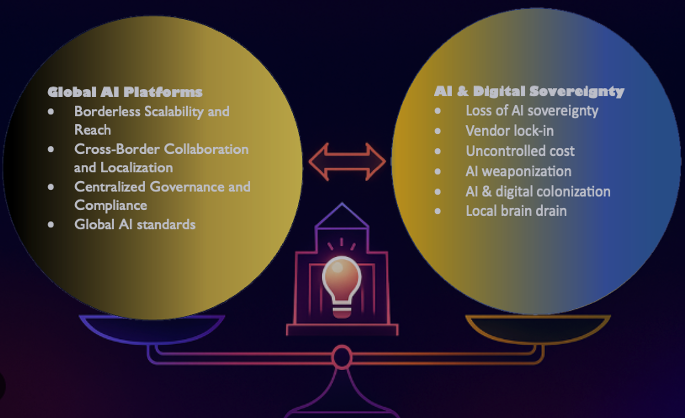
Global AI platforms are dominating the worldwide deployment of AI applications across various sectors, including defense, education, government, and healthcare. Although this approach can substantially expedite development, mitigate expenses, and facilitate access to a global repository of expertise, its widespread adoption, particularly in developing regions, may also result in unforeseen repercussions, including the erosion of AI sovereignty.
This panel focuses on AI Sovereignty—the ability of an organization, nation, and continent to maintain independent control over their AI and digital destiny. This entails having meaningful authority over digital infrastructure, data, and technology without excessive reliance on foreign digital and AI technologies, infrastructures, and workforce. Although this is a broad topic, the discussion will be centered around the following subtopics of interest to this conference:
Topic 1. The AI global Platforms - Opportunities and Challenges
How to contribute to the panel discussion.
The panel is a hybrid online and in-person event open to all conference registrants. Conference attendees interested in serving as panelists should submit their request to the panel organizers.
------------------------------------------------------
Contact information: Thomas Dousseu. Email: general-chair@paaiss.com, Charmaine Delisser, Email: charmsdelisser@gmail.com
This panel focuses on AI Sovereignty—the ability of an organization, nation, and continent to maintain independent control over their AI and digital destiny. This entails having meaningful authority over digital infrastructure, data, and technology without excessive reliance on foreign digital and AI technologies, infrastructures, and workforce. Although this is a broad topic, the discussion will be centered around the following subtopics of interest to this conference:
Topic 1. The AI global Platforms - Opportunities and Challenges
- AI global AI infrastructure such as Large-scale datacenters, energy grid, special supercomputing facilities, workforce pipeline, and investment stream
- AI-as-a-Service global platforms Google, Amazon, Nvidia, OpenAI, Claude, Meta, Lindy, Hugging Face, etc.) and their impacts on AI adoption around the world
- AI Workforce – Global AI platforms comes with external expertise which can undermine development of local AI workforce.
- Geopolitics of Global AI Infrastructures: In the current geopolitical landscape, nations with global AI infrastructures, including those offering AI-as-a-Service, have demonstrated no restraint in weaponizing these capabilities to exert socio-political and economic dominance over smaller emerging countries in the global south.
- Lost of AI Sovereignty - The unchecked and unverified adoption of global artificial intelligence (AI) in developing countries poses a significant threat to their sovereignty. This phenomenon, often referred to as data colonialism and algorithmic imperialism, can result in the marginalization and displacement of local cultures, languages, value systems, and traditions. Consequently, these developing nations may find themselves overwhelmed by the dominance of Western AI practices and ideologies
- The Acceleration of the Digital Divide: In certain countries, the automation of AI poses a substantial threat to a workforce with limited digital skills, hindering their ability to effectively support AI-augmented roles. This could result in a widening digital divide, exacerbating existing inequalities and impeding economic growth.
- Digital Sovereignty - Al regulatory policy to guide local implementation development and implementation AI systems
- Strategies for establishing national or regional AI infrastructures (compute, data centers, energy grid) that are collaboratively managed by multiple organizations and nations.
- AI Hybridization – support OpenAI standard, develop value-added services, and minimize AI-as-a-Service
How to contribute to the panel discussion.
The panel is a hybrid online and in-person event open to all conference registrants. Conference attendees interested in serving as panelists should submit their request to the panel organizers.
------------------------------------------------------
Contact information: Thomas Dousseu. Email: general-chair@paaiss.com, Charmaine Delisser, Email: charmsdelisser@gmail.com